Department of Food Technology
About the Department
The Department of Food Technology at Ballarpur Institute of Technology is dedicated to imparting high-quality technical education and fostering excellence in the field of Food Technology. The department aims to develop competent professionals equipped with strong scientific knowledge, practical expertise, innovative thinking, leadership abilities, and ethical values.
The department provides a vibrant academic environment supported by highly qualified faculty members, well-equipped laboratories, modern infrastructure, and industry-oriented teaching methodologies. Emphasis is placed on Outcome-Based Education (OBE), experiential learning, research and innovation, product development, industrial interaction, and food safety practices.
The department continuously strives to bridge the gap between academia and industry, nurturing technically proficient, socially responsible food technologists capable of contributing meaningfully to food security, sustainable development, and public health.
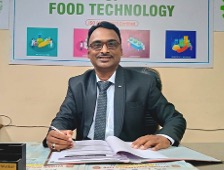
Dr. Prashant Shamrao Watkar
Head of Department – Food Technology
18+ Years Experience
Qualifications
- Ph.D.
- Post-Doctoral Research Fellow
- MSc, PGDN, PGDMLT
Areas of Expertise
Message from HOD
Food Technology is a dynamic and multidisciplinary field that plays a crucial role in ensuring food quality, safety, nutrition, sustainability, and innovation. As the food industry continues to evolve with emerging technologies and changing consumer demands, the need for skilled food technologists is greater than ever.
Our department is committed to providing quality education, practical exposure, research opportunities, and industry-oriented training that empower students to excel in their professional careers. Through modern laboratories, project-based learning, industrial interactions, and innovation-driven initiatives, we strive to develop competent professionals ready to contribute to the food processing and allied industries.
We encourage our students to actively participate in research, entrepreneurship, internships, technical competitions, and professional development activities that enhance their knowledge, confidence, and leadership abilities.
Dr. Prashant Shamrao Watkar
Head of Department – Food Technology
Department of Food Technology
Department Summary
| Program | Intake | Faculty | Labs |
|---|---|---|---|
| B.Tech | 60 | 09 | 05 |
Research Details
65+ research papers published in various journals
9+ patents granted
Research Areas & Domains
Food Processing & Engineering
HPP, cold plasma, 3D printing, drying, and extrusion technologies.
Food Chemistry
Flavors, additives, nutraceuticals, and protein/lipid chemistry.
Food Microbiology & Safety
Fermentation, probiotics, pathogen detection, and shelf-life studies.
Food Quality & Sensory
AI grading, electronic nose/tongue, and texture/colour analysis.
Nutrition & Functional Foods
Bioactives, alternative proteins, and personalized food.
Food Sustainability
Food waste valorization, upcycling, bio-packaging, and zero-waste approaches.
Food Nanotechnology
Nano-encapsulation and nano-sensors for food safety.
Digital & AI
Smart manufacturing, blockchain traceability, and food fraud detection.
Our Vision
To develop industry-ready food technology professionals capable of advancing safe, nutritious, innovative, and sustainable food systems through technical excellence, research, and professional ethics.
Our Mission
- To develop competence in food safety, quality, and nutrition through effective food processing practices.
- To enable sustainable and environmentally responsible food production practices.
- To enhance professional competence and ethical responsibility through outcome-based learning.
Department Highlights
50+
Research Papers
09
Patents
18+ Yrs
Experience
Facilities & Laboratories
Program Objectives
Program Educational Objectives (PEO's)
- PEO1: Demonstrate technical proficiency in food processing, quality control, and food safety practices.
- PEO2: Apply innovative and sustainable solutions to real-world food industry challenges.
- PEO3: Perform effectively as an individual and team member with professional and ethical behavior.
Program Specific Outcomes (PSO's)
- PSO1: Apply food engineering and processing principles for the production, preservation, packaging, and storage of safe and quality food products.
- PSO2: Utilize food safety, quality assurance, and sustainable food processing practices to develop innovative solutions for the food industry and society.
Program Outcomes (PO's)
- PO1: Apply knowledge of mathematics, science, engineering, and food technology fundamentals to solve food processing and preservation problems.
- PO2: Identify, analyze, and solve problems related to food safety, quality assurance, nutrition, and food processing operations.
- PO3: Design and develop safe, nutritious, and sustainable food products and processing systems to meet industry and societal needs.
- PO4: Conduct experiments, analyze data, and interpret results using modern laboratory techniques and analytical tools relevant to food technology.
- PO5: Use modern food processing equipment, quality testing methods, and digital tools for efficient food production and management.
- PO6: Apply professional knowledge to ensure food safety, public health, legal compliance, and social responsibility in the food sector.
- PO7: Understand the environmental impact of food processing practices and promote sustainable and eco-friendly food production systems.
- PO8: Demonstrate professional ethics, integrity, and responsibility in food industry operations, research, and community service.
- PO9: Function effectively as an individual and as a member or leader in multidisciplinary teams.
- PO10: Communicate effectively through technical reports, presentations, documentation, and professional interactions.
- PO11: Engage in lifelong learning and adapt to emerging technologies, innovations, and trends in food science and technology.