Department of Electrical Engineering
About the Department
The Department of Electrical Engineering at Ballarpur Institute of Technology is dedicated to imparting high-quality technical education and fostering excellence in the field of Electrical Engineering. The department aims to develop competent professionals equipped with strong theoretical foundations, practical expertise, innovative thinking, leadership abilities, and ethical values to address the challenges of a rapidly evolving technological landscape.
The department provides a vibrant academic environment supported by highly qualified faculty members, state-of-the-art laboratories, modern infrastructure, and industry-oriented teaching methodologies. Emphasis is placed on Outcome-Based Education (OBE), experiential learning, research and innovation, interdisciplinary projects, industrial interaction, and skill enhancement programs to ensure the holistic development of students.
Through technical workshops, expert lectures, industrial visits, skill-development programs, internships, research and entrepreneurship activities, technical competitions, and training on emerging technologies, automation and sustainable energy systems, the department continuously strives to bridge the gap between academia and industry — nurturing technically proficient, socially responsible, and industry-ready engineers capable of contributing to technological progress, sustainable development, and nation-building.
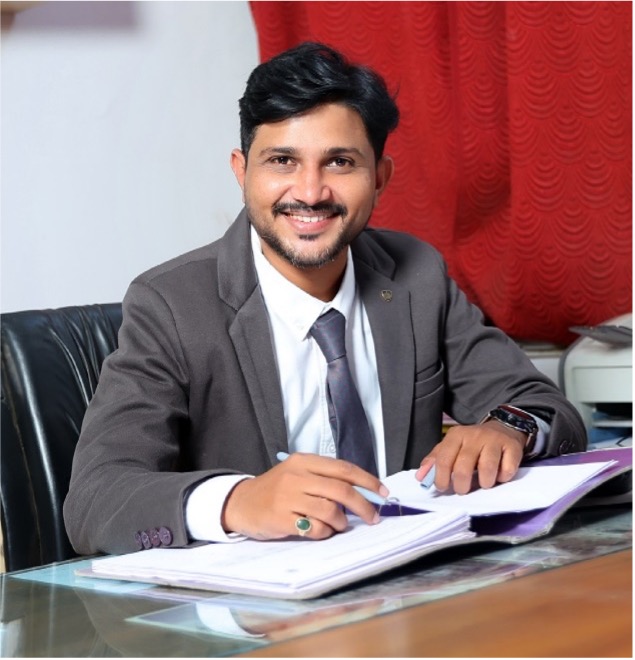
Prof. Vishal M. Pimpalkar
Head of Department – Electrical Engineering
14 Years Experience
Qualifications
- Pursuing Ph.D. in Electrical Engineering
- M.Tech. (Electrical Power System)
Areas of Expertise
Message from HOD
Welcome to the Department of Electrical Engineering at Ballarpur Institute of Technology, Ballarpur.
Electrical Engineering is a core branch of engineering that plays a vital role in technological advancement and serves as the foundation for many modern disciplines. With the growing demand for sustainable energy, electric vehicles, automation, and smart technologies, the opportunities for Electrical Engineers continue to expand.
Established in 2009, our department is dedicated to providing quality education, fostering innovation, and developing industry-ready professionals. Through experienced faculty, modern learning practices, technical activities, industrial interactions, and project-based learning, we strive to equip students with strong technical knowledge and practical skills.
We encourage our students to actively participate in research, technical events, internships, and professional development activities that enhance their overall growth and prepare them for successful careers.
Research & Recognition: 26 papers published in international journals, 01 published patent, 10 FDPs/workshops attended, and recipient of the Certificate of Excellence – Best Teacher Award (Electrical Engineering Department), BIT Ballarpur.
Prof. Vishal M. Pimpalkar — Head of Department, Electrical Engineering.
Prof. Vishal M. Pimpalkar
Head of Department – Electrical Engineering
Department of Electrical Engineering
Department Summary
| Program | Intake | Faculty | Labs |
|---|---|---|---|
| B.Tech | 60 | 09 | 09 |
| M.Tech | 18 | 03 | 01 |
Research Details
150+ research papers published in various journals
15+ patents
Research Areas & Domains
Smart Grid and Modern Power Systems
Renewable Energy Systems
Electric Vehicles (EV) and E-Mobility
Artificial Intelligence and Machine Learning in Electrical Engineering
Power Electronics and Drives
Internet of Things
Electrical Machines
Sustainable Energy and Green Technologies
High Voltage Engineering
Industrial Automation and Industry 4.0
Our Vision
To emerge as a centre of excellence in Electrical Engineering education by developing technically competent, innovative, ethical, and industry-ready professionals capable of contributing to sustainable technological and societal development.
Our Mission
- To provide quality education in Electrical Engineering through effective teaching–learning processes, modern laboratories, outcome-based curriculum, and industry-oriented training to develop technically competent engineers.
- To nurture professionally skilled, ethical, and socially responsible engineers with leadership qualities, problem-solving abilities, teamwork skills, and an attitude of lifelong learning, innovation, research, and entrepreneurship.
- To strengthen collaboration with industries, research organizations, alumni, and professional bodies for skill enhancement, internships, consultancy, innovation, and sustainable societal development.
Department Highlights
Facilities & Laboratories
Program Objectives
Program Educational Objectives (PEO's)
- PEO1 – Knowledge: Apply Electrical Engineering knowledge to develop solutions for industrial, societal, and technological challenges.
- PEO2 – Skills: Demonstrate technical competence, innovation, and engineering skills for electrical and automation systems.
- PEO3 – Attitude: Exhibit ethical values, leadership, teamwork, and lifelong learning for sustainable professional growth.
Program Specific Outcomes (PSO's)
- PSO1 – Industrial and Professional Competence: Apply engineering knowledge, practical skills, and industrial training experience to analyse, design, and solve real-world electrical engineering problems effectively.
- PSO2 – Innovation and Technology Development: Design, develop, and implement innovative solutions in Power Systems, Electric Drives, and hardware technologies while demonstrating awareness of intellectual property rights and engineering innovation.
Program Outcomes (PO's)
- PO1 – Engineering Knowledge: Apply knowledge of mathematics, natural science, computing, engineering fundamentals, and an engineering specialization to the solution of complex engineering problems.
- PO2 – Problem Analysis: Identify, formulate, review research literature, and analyze complex engineering problems reaching substantiated conclusions with consideration for sustainable development.
- PO3 – Design/Development of Solutions: Design creative solutions for complex engineering problems and design/develop systems, components, or processes to meet identified needs with consideration for public health and safety, whole-life cost, net zero carbon, culture, society, and environment as required.
- PO4 – Conduct Investigations of Complex Problems: Conduct investigations of complex engineering problems using research-based knowledge including design of experiments, modelling, analysis, and interpretation of data to provide valid conclusions.
- PO5 – Engineering Tool Usage: Create, select, and apply appropriate techniques, resources, and modern engineering and IT tools, including prediction and modelling, recognizing their limitations to solve complex engineering problems.
- PO6 – The Engineer and the World: Analyze and evaluate societal and environmental aspects while solving complex engineering problems for their impact on sustainability with reference to economy, health, safety, legal framework, culture, and environment.
- PO7 – Ethics: Apply ethical principles and commit to professional ethics, human values, diversity, and inclusion; adhere to national and international laws.
- PO8 – Individual and Collaborative Team Work: Function effectively as an individual, and as a member or leader in diverse and multi-disciplinary teams.
- PO9 – Communication: Communicate effectively and inclusively within the engineering community and society at large, such as being able to comprehend and write effective reports and design documentation, and make effective presentations considering cultural, language, and learning differences.
- PO10 – Project Management and Finance: Apply knowledge and understanding of engineering management principles and economic decision-making, and apply these to one’s own work, as a member and leader in a team, to manage projects in multi-disciplinary environments.
- PO11 – Life-Long Learning: Recognize the need for, and have the preparation and ability for: (i) independent and life-long learning, (ii) adaptability to new and emerging technologies, and (iii) critical thinking in the broadest context of technological change.