Department of Computer Science & Engineering
About the Department
The Department of Computer Science & Engineering (CSE) at Ballarpur Institute of Technology, established in 2009, offers undergraduate (B.Tech) and postgraduate (M.Tech) programs. The department has well-qualified and motivated faculty members and supporting staff.
The department is equipped with modern laboratories and advanced computing facilities that provide a conducive environment for learning and research.
The department focuses on nurturing competent professionals equipped with technical expertise, innovation skills, ethical values, leadership qualities, and industry readiness to meet global technological challenges.
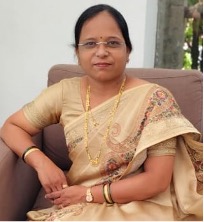
Dr. Mrunali Vaidya
Head of Department – Computer Science & Engineering
14 Years (9 Teaching + 5 Research) Experience
Qualifications
- Ph.D. in Computer Science & Engineering
- M.Tech in Computer Science & Engineering
Areas of Expertise
Message from HOD
Welcome to the Department of Computer Science & Engineering.
Our department is dedicated to providing quality education and helping students build strong technical knowledge and practical skills. We encourage learning, innovation, teamwork, and ethical values to prepare students for successful careers in the field of technology. With the support of experienced faculty members and well-equipped laboratories, we strive to create a positive learning environment where students can grow academically and personally.
We encourage our students to actively participate in research, technical events, internships, and professional development activities that enhance their overall growth and prepare them for successful careers.
Dr. Vaidya brings 3 years of administrative experience and has 14 research publications to her credit.
Dr. Mrunali Vaidya
Head of Department – Computer Science & Engineering
Department of Computer Science & Engineering
Department Summary
| Program | Intake | Faculty | Labs |
|---|---|---|---|
| B.Tech | 90 | 12 | 05 |
| M.Tech | 18 | 03 | 01 |
Research Details
130+ research papers published in various journals
The institution actively conducts workshops motivating researchers toward commercial patents and start-ups.
Research Areas & Domains
Natural and Modern Farming Advisory Platform
The primary objective is to empower farmers by integrating farming practices with modern technology.
Modern Hire AI (AI Skill Gap Analyser)
The objective is to incorporate contextual understanding of an applicant's qualities in the recruitment process.
SMARTEVAL: AI Based Answer-sheet Evaluation System
NLP based automatic evaluation of handwritten answers.
IoT Based Hydroponic System
The primary objective is to grow plants without soil by providing nutrients directly through water. The system integrates sensors and actuators to regulate plant growing conditions.
Our Vision
To be a centre of excellence in Computer Science & Engineering education by fostering innovation, technical competence, ethical values, research culture, and industry-oriented learning for the development of globally responsible professionals.
Our Mission
- To provide strong theoretical and practical Computer Science & Engineering education through modern, outcome-based learning.
- To produce quality human resource in broad domain of Computer Science & Engineering for the sustainable development of IT industry need.
- To encourage research, innovation, entrepreneurship, and lifelong learning via advanced infrastructure, ongoing faculty training, and modern technology.
- To foster industry and academic collaborations to enhance employability, skill development, internships, and sustainable technological growth.
Department Highlights
180+
Total Students
10+
Faculty Members
75%
Placement Rate
Facilities & Laboratories
Program Objectives
Program Educational Objectives (PEO's)
- PEO1: Understand and apply core as well as emerging concepts in Computer Science & Engineering to analyze, design, and develop innovative computing solutions for industrial, societal, and technological challenges.
- PEO2: Develop proficiency in modern skills, techniques, software development practices, experimentation, and project implementation to meet professional and industry requirements.
- PEO3: Adapt to evolving technologies and career opportunities, communicate effectively, collaborate in multidisciplinary teams, and develop the professional, ethical, and social skills required for engineers and leaders.
Program Specific Outcomes (PSO's)
- PSO1: Understand and evaluate the ideas and state of the art in computer science and engineering theory, systems, and applications.
- PSO2: Design and implement effective computing solutions across Computer Science domains benefiting society and environment.
Program Outcomes (PO's)
- PO1 – Engineering Knowledge: Apply the knowledge of mathematics, science, engineering fundamentals, and Computer Science & Engineering principles to solve complex engineering problems.
- PO2 – Problem Analysis: Identify, analyze, and formulate complex computing problems using logical reasoning, analytical skills, and domain knowledge.
- PO3 – Design and Development of Solutions: Design and develop efficient, secure, and sustainable computing solutions, software systems, and applications that meet specified requirements considering societal and environmental needs.
- PO4 – Investigation of Complex Problems: Use research-based knowledge, modern tools, and experimental methods to investigate, analyze, and interpret data for solving complex engineering problems.
- PO5 – Modern Tool Usage: Select and apply appropriate modern engineering tools, programming platforms, and computing technologies for modeling, simulation, design, and development activities.
- PO6 – Engineer and Society: Apply contextual knowledge to assess societal, legal, ethical, and cultural issues relevant to professional engineering practices and computing solutions.
- PO7 – Environment and Sustainability: Understand the impact of engineering solutions on society and the environment and promote sustainable and responsible technological development.
- PO8 – Ethics: Apply ethical principles and commit to professional ethics, responsibilities, integrity, and standards in engineering practices.
- PO9 – Individual and Team Work: Function effectively as an individual and as a member or leader in multidisciplinary teams to accomplish common goals.
- PO10 – Communication: Communicate effectively with the engineering community and society through technical reports, presentations, documentation, and interpersonal interactions.
- PO11 – Project Management and Lifelong Learning: Demonstrate knowledge of project management, entrepreneurship, innovation, and lifelong learning to adapt to technological advancements and professional growth.